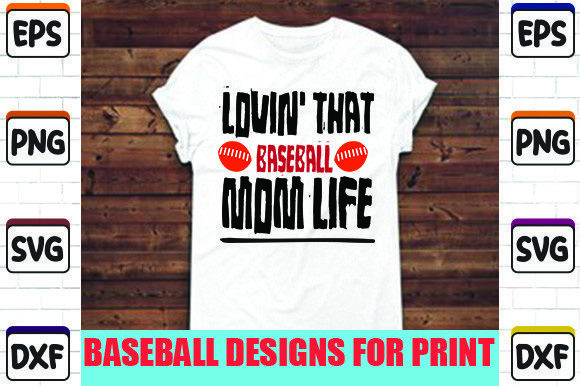
Lovin That Baseball Mom Life: A Designer's Review
As a designer who spends countless hours translating digital files into tangible stitched goods, I approach every new asset with a mix of excitement and skepticism. The market is flooded with generic T-Shirt Designs, but finding a piece that truly captures the spirit of a niche community like baseball families requires a keen eye. Today, I am evaluating the Lovin That Baseball Mom Life design to see if it holds up under the scrutiny of real-world application. This isn't just about whether the image looks good on a screen; it is about how it translates when thread meets fabric.
First Impressions: Mood and Visual Personality
When I first opened the ZIP file containing the SVG, DXF, EPS, and PNG formats, my immediate reaction was positive regarding the layout. The phrase "Lovin That Baseball Mom Life" is a staple in sports fandom, but the execution here feels distinct. The typography has a playful, slightly retro energy that resonates well with the demographic of parents who want to show support without looking too corporate. As a set of Graphics, the lines are clean, which is promising for conversion into an embroidery file. However, since this product is explicitly listed as a digital file for print, not a physical product or pre-converted machine embroidery design, there is a crucial step before any stitching begins.
The visual weight of the text suggests it would work beautifully as a central focal point on a sweatshirt or a large tote bag. The mood is celebratory and proud, making it an ideal candidate for personalized gifts or small shop merchandise. For an Etsy seller or craft business owner, this kind of design asset offers immediate recognition. It taps into a specific identity that customers are eager to display. Yet, the transition from a flat digital graphic to a textured, three-dimensional finished product is where the true test lies.
From Screen to Stitch: Practical Application Scenarios
Imagine you are preparing a custom embroidered sweatshirt for a client who is organizing a team party. You load the Lovin That Baseball Mom Life design into your digitizing software. The first thing I look for is the balance between the lettering and any accompanying iconography. In this case, the text-heavy nature means that stitch density will be critical. If you rush the digitization, the fill stitch could become too dense, causing puckering on heavier fabrics like fleece or cotton blends.
I envision using this design on a high-quality canvas tote bag. Tote bags are forgiving because they are usually made of sturdy material that can handle the tension of a larger hoop size. Here, the design would shine. The contrast of bright thread colors against a natural or navy background would make the message pop. Alternatively, consider a baby item, perhaps a onesie or a nursery pillow cover. For these delicate applications, the design needs to be scaled down carefully. The running stitch used for outlining the letters must remain crisp even at smaller sizes. If the details get lost, the handmade product loses its professional appeal.
For the apparel decorator, this design fits perfectly into the category of custom apparel. Think of a boutique creating a limited run of shirts for a local little league fundraiser. The ability to offer a recognizable, sentiment-driven design can drive significant buyer engagement. However, remember that the source file is a vector graphic. You must ensure your digitizer understands how to convert those sharp vector points into smooth satin stitches or appropriate fills. Poorly converted corners can lead to thread breakage or unsightly gaps in the final embroidery project.
Navigating Challenges: Where Caution is Needed
While the potential is high, there are specific scenarios where Lovin That Baseball Mom Life requires extra caution. Small hoop sizes are a major concern. If you attempt to fit the entire phrase into a 4x4 inch hoop, the lettering may become too cramped. This often results in a loss of legibility and a messy appearance. Always check the recommended hoop size before committing to a project. If the design is too large for your hoop, you may need to split the design or scale it back, which can alter the original aesthetic.
Fabric texture also plays a pivotal role. On highly textured fabrics like terry cloth towels or thick knits, the detail in the lettering might get swallowed by the weave. In such cases, a heavy-duty stabilizer is non-negotiable. Without proper stabilization, the needle pulls the fabric, distorting the shape of the letters. Similarly, on stretchy fabrics like performance jerseys, the tension required for embroidery can cause the garment to warp. It is safer to use this design on structured garments or items where stability is easier to maintain.
Dark fabrics present another challenge. While the design looks great in black and white mockups, stitching light-colored thread on dark fabric requires a solid backing to prevent the base color from showing through the fill stitch. You might need to add a layer of underlay or even consider an applique design approach if the density is insufficient. Additionally, tiny lettering within the phrase can be problematic on curved surfaces like caps. The curvature can distort the text, making it hard to read. It is often better to reserve this specific layout for flat surfaces like t-shirts, aprons, or pillow covers.
Designer Notes for Professional Results
To ensure the highest quality, I always advise testing the design on scrap fabric first. Never skip this step. Load your digitized version of Lovin That Baseball Mom Life onto a piece of the actual fabric you plan to use. Check the thread color contrast to ensure readability from a distance. Inspect the small details closely; do the serifs on the letters hold their shape? Is the stitch density consistent across the entire word?
Furthermore, create printable mockups in both light and dark variations to visualize the final look before cutting any thread. This helps in selling the concept to clients or showcasing it in your online store. Confirm the licensing terms clearly. Since this is a digital file intended for paper crafts and print, verify if the license allows for commercial embroidery projects. Selling finished items or digital embroidery files based on this graphic requires explicit permission to avoid legal issues with your craft business.
In conclusion, Lovin That Baseball Mom Life is a versatile asset with strong emotional appeal. When handled with care, proper digitization, and attention to fabric limitations, it becomes a standout piece in any collection of commercial embroidery or personal gifts. Whether you are making holiday embroidery, a personalized gift for a friend, or stocking your handmade shop, this design has the potential to deliver a professional, high-value result. Just remember: the success of the embroidery depends less on the digital file itself and more on the skill and preparation of the maker behind the machine.